
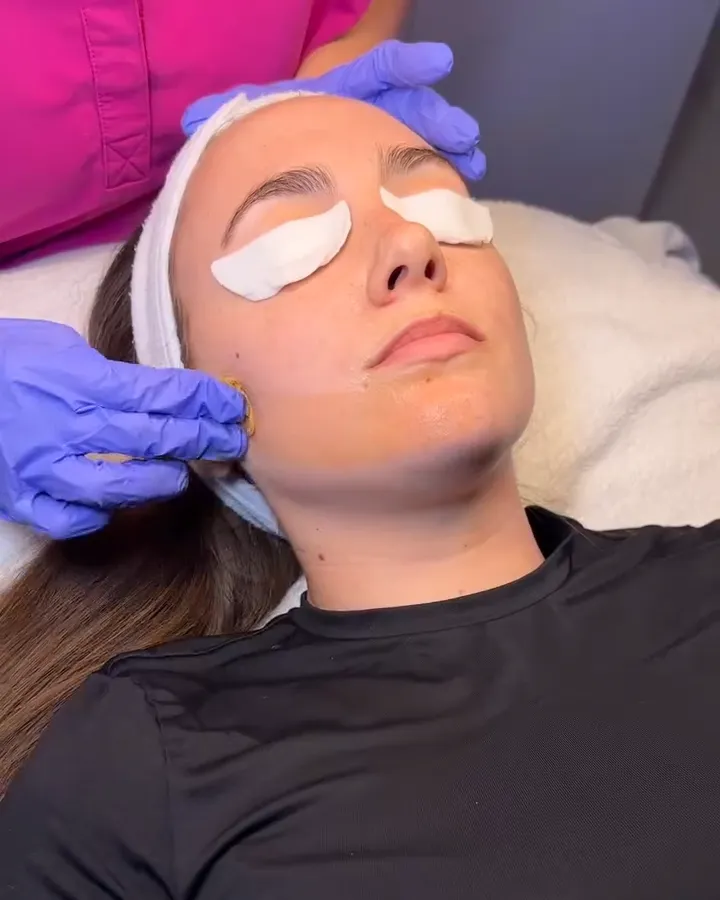
Melasma treatment in Boca Raton at Cosmetica Med Spa starts at $299 for a chemical peel, with a plan built around your skin and overseen by our board-certified dermatologist, Dr. Andrei Gherghina. Melasma is the patchy brown or gray-brown pigment that shows up on the cheeks, forehead and upper lip, often after sun, heat or hormone changes. It can't be switched off for good, but with the right in-office treatments, home care and sun protection, most people can fade it and keep it under control.
What melasma looks like
- Brown or gray-brown patches, usually on both sides of the face
- Most often on the cheeks, forehead, bridge of the nose, upper lip and chin
- Edges that look blotchy rather than like separate dots
- Patches that darken in summer or after time in the sun or heat
- Patches that started or got worse during pregnancy or on birth control
Melasma is much more common in women, and in medium to darker skin tones. Men get it too.
What causes melasma
Melasma happens when the pigment cells in your skin become overactive and make too much pigment in certain areas. The main triggers are:
- Sun. UV light is the biggest trigger, and in South Florida it's year-round.
- Visible light and heat. Light from the sun, and even heat from workouts, saunas or a hot kitchen, can darken patches. That's why ordinary sunscreen alone often isn't enough.
- Hormones. Pregnancy, birth control and hormone therapy can trigger it. Melasma in pregnancy is often called the "mask of pregnancy."
- Genetics. It often runs in families.
- Irritation. Harsh products and aggressive treatments can make it worse.
Melasma, sun spots or acne marks?
Not all dark spots are melasma, and the right treatment depends on which one you have. Your provider looks closely at your skin to tell them apart.
| Melasma | Sun spots | Dark marks after acne | |
|---|---|---|---|
| What it looks like | Blotchy patches, usually on both cheeks or the forehead | Separate, well-defined brown spots | Flat brown or purple marks where breakouts were |
| Main cause | Sun, heat and hormones | Years of sun exposure | Inflammation from breakouts |
| Best approach | Gentle treatments, home care and strict sun protection | Brown spot removal | Chemical peels or microneedling |
| Comes back? | Often, so maintenance matters | New spots can form with sun | Usually fades for good once breakouts are controlled |
Any spot that's new, changing, raised, irregular or bleeding should be checked by a dermatologist before any cosmetic treatment.
How we treat melasma
Melasma responds best to steady, gentle treatment. Aggressive treatments that heat or injure the skin can trigger more pigment, so a careful plan beats a quick, strong one. Most plans combine three things:
- In-office treatments to lift pigment that's already there.
- Home care, usually a pigment-correcting routine your provider recommends for your skin.
- Daily sun and heat protection, which keeps new pigment from forming.
Melasma treatment options at Cosmetica
| Treatment | How it helps melasma | Typical plan | Downtime |
|---|---|---|---|
| Chemical peel | Lifts pigmented outer skin and speeds up cell turnover. Light, repeated peels are the most common in-office treatment for melasma | A series of 3 to 6, a few weeks apart | None to a few days of light flaking |
| SkinPen microneedling | Tiny controlled channels trigger renewal and help fade melasma patches, while improving tone and texture | A series of 3 to 6, about a month apart | 1 to 3 days of redness |
| Hydrafacial | A gentle facial that brightens dull skin between treatments, with no irritation | Monthly, as maintenance | None |
Prescription creams
Many melasma plans also include a prescription cream to use at home between treatments. Our medical team can prescribe one when it fits your skin and health history, and will explain how to use it safely.
Melasma treatment cost in Boca Raton
| Treatment | Starting price |
|---|---|
| Chemical peel | From $299 per peel (a series of 3 from $897) |
| SkinPen microneedling | From $399 per session |
| Hydrafacial | From $199 |
Most melasma plans use a series of treatments, so your total depends on how many sessions you need. Your provider gives you a full plan and price at your consultation, before anything is done. Payment plans are available through Cherry and CareCredit; see financing.
A $100 deposit is collected when you book and credited to your treatment. If you cancel or reschedule at least 24 hours before your appointment, your deposit stays on your account as a credit. If you miss your appointment or cancel less than 24 hours before, the $100 deposit is forfeited and non-refundable.
Your first visit, step by step
- Skin check. Your provider looks at the pattern of your pigment, asks about sun, hormones, pregnancy and the products you use, and confirms whether it's melasma, sun spots or something else.
- Your plan. You get a written plan: which in-office treatment, how many sessions, your home routine and your sun protection.
- First treatment. Often a light peel, so we can see how your skin responds before stepping up.
- Follow-up. We check progress every few weeks and adjust the plan.
Results timeline
- Weeks 1 to 4: skin looks brighter and smoother. Pigment starts to lighten.
- Weeks 4 to 12: patches fade more noticeably as your series goes on.
- After your series: maintenance treatments and daily sun protection keep it from coming back.
Melasma can return with sun, heat or hormone changes, even after it fades. Think of it like managing your skin long term, not a one-time fix. Individual results vary.
Sun protection in Boca Raton
In South Florida, sun protection is the most important part of any melasma plan.
- Wear a broad-spectrum SPF 30 or higher every day, rain or shine.
- Choose a tinted mineral sunscreen. The iron oxides that give it color also block visible light, which regular sunscreen doesn't.
- Reapply every two hours outdoors, and after swimming or sweating.
- Add a wide-brimmed hat and sunglasses for the beach, the boat or the golf course.
- Keep heat in mind too: long saunas, hot yoga and hot tubs can darken patches.
Melasma during pregnancy
Melasma often starts during pregnancy and may fade on its own in the months after delivery. Many melasma treatments, including peels and prescription creams, are usually postponed until after pregnancy and breastfeeding. In the meantime, gentle skin care and daily mineral sunscreen are the safest way to keep it from getting darker. We'll build your treatment plan when the timing is right.
Melasma in darker skin tones
Medium and darker skin tones are more likely to get melasma, and more likely to darken after irritation. That's why we start gently, build up slowly and avoid heat-heavy treatments. Your provider chooses peel strengths and settings for your skin tone.
Aftercare
- Follow the aftercare for your treatment, like our chemical peel aftercare.
- Don't pick or scrub flaking skin, which can cause new dark marks.
- Skip retinoids and exfoliating acids for a few days after a peel, unless your provider says otherwise.
- Wear SPF 30 or higher daily and avoid direct sun and tanning beds for 2 weeks after a treatment.
Melasma treatment near Delray Beach, Boynton Beach and Deerfield Beach
Our Boca Raton office on N. Federal Highway is a short drive from south Palm Beach and north Broward counties. Coming from nearby? See facials near Delray Beach, or our Boynton Beach, Highland Beach, Deerfield Beach and Parkland pages for directions.
Why choose Cosmetica Med Spa
Every plan is overseen by a board-certified dermatologist and fellowship-trained Mohs surgeon, so your pigment is assessed by a skin doctor's standards. We treat melasma gently and steadily, because that's what works. We're open every day from 8am to 8pm.
When can you work out, drink alcohol or wear makeup? Our aftercare guide covers exactly what to do and avoid.
See the aftercare guide →Frequently asked questions
How much does melasma treatment cost in Boca Raton?
At Cosmetica Med Spa, chemical peels start at $299 per peel and SkinPen microneedling starts at $399 per session. Most melasma plans use a series, so your provider gives you a full plan and price at your consultation.
What is the best treatment for melasma?
There isn't one best treatment for everyone. The plans that work best combine gentle in-office treatments, like a series of light chemical peels or SkinPen microneedling, with a home routine and strict daily sun protection. Your provider builds the plan around your skin.
Can melasma be cured?
Not permanently. Melasma can fade a lot with treatment, but it can come back with sun, heat or hormone changes. Maintenance treatments and daily sun protection keep it under control.
Does melasma go away on its own?
Sometimes. Melasma that starts during pregnancy or on birth control may fade after delivery or after stopping the pill. Melasma from other causes often lasts for years without treatment.
What's the difference between melasma and sun spots?
Melasma shows up as blotchy patches, usually on both cheeks, the forehead or the upper lip, and is triggered by sun, heat and hormones. Sun spots are separate, well-defined spots from years of sun. They're treated differently, so it's worth having your skin checked. See brown spot removal.
Can laser treatment make melasma worse?
Some can. Heat-based lasers and light treatments can make melasma darker in some people. That's why we treat melasma with gentle options like light chemical peels and SkinPen microneedling.
Is a chemical peel good for melasma?
Yes. A series of light chemical peels is one of the most common in-office treatments for melasma. Peels are started gently and stepped up as your skin allows. See chemical peels.
Does microneedling help melasma?
Yes. SkinPen microneedling is one of our go-to treatments for melasma. A series of sessions about a month apart, combined with daily sun protection, helps fade patches and even out tone.
Can you prescribe a cream for melasma?
Yes. Our medical team can prescribe a cream for melasma when it fits your skin and health history, usually alongside in-office treatments and sun protection.
Can I treat melasma while pregnant?
Most melasma treatments, including peels and prescription creams, are usually postponed until after pregnancy and breastfeeding. Gentle skin care and daily mineral sunscreen are the safest steps in the meantime.
What sunscreen is best for melasma?
A broad-spectrum, tinted mineral sunscreen with SPF 30 or higher. The iron oxides in tinted formulas also block visible light, which can darken melasma.
How long until I see results?
Skin usually looks brighter within a few weeks, and patches fade more noticeably over 4 to 12 weeks as you go through your series.
Is melasma treatment safe for darker skin?
Yes, when it's done gently. Darker skin tones are more prone to melasma and to darkening after irritation, so we start with lighter treatments and build up slowly.
Medically reviewed by Dr. Andrei Gherghina, DO, board-certified dermatologist.
See prices for every treatment · Booking and first-visit FAQ